

Quick summary
Great real estate photography helps the right buyer click, book a viewing, and feel confident enough to make an offer sooner. Homes don’t sell because of “pretty pictures”—they sell because the photo set matches how buyers actually shop online: fast, critical, and detail-driven.
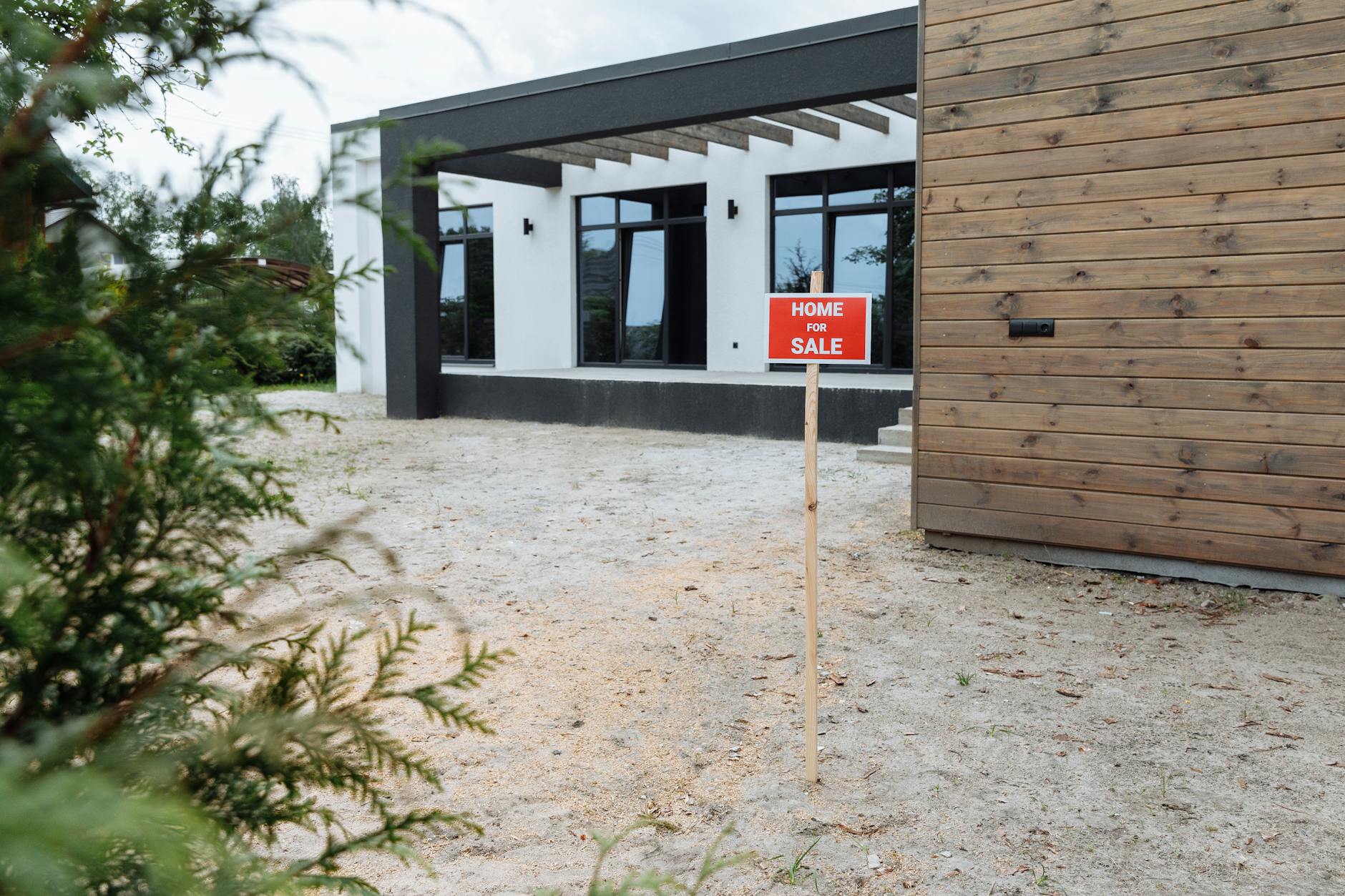
- Start with 12–18 strong photos as your core set; beyond that, it often becomes repetition instead of persuasion.
- Keep Funda’s technical requirements in mind: photos are usually shown in a 4:3 ratio and must stay crisp on mobile.
- Stick to one clear storyline: arrival, living, cooking, sleeping, outside. A logical order feels calm and trustworthy.
- Avoid the biggest conversion killer: photos that look better than reality. That brings fewer serious viewings.
- Schedule photography around light: a morning or late-afternoon shoot often beats a rushed “quick one” at 12:30.
Introduction
A buyer in Helmond scrolls through 40 new listings on a Sunday night. Each home gets just a few seconds on the first photos. If it looks cluttered, too dark, or the layout is hard to read, the decision is instant: next. Real estate photography isn’t a “nice-to-have” in that moment—it’s the difference between a click and a pass.
Metselaars Makelaardij is an NVM real estate agency based in Nuenen (active since 1981) that helps private clients with selling, buying, off-market sales, and valuation/appraisals in the Brainport region. In this area, buyers often come with a tight profile: working in Eindhoven, raising a family in the villages, or choosing compact living with strong transport links. That means photos aren’t just “presentation”—they’re decision-making data.
Here’s the surprising reality: the best listing photos are rarely the most “artistic.” They’re reliably good. Straight lines, believable perspective, consistent colour, and a series that shows how you actually live there—without needing a sales pitch. This article breaks down the method Metselaars Makelaardij uses to make photography work as part of the sales strategy, including a real-world scenario and practical checks.
The challenge: why buyers drop off because of photos—even when the home is good
The real challenge is that listing photos have to do more than grab attention—they must build trust. Buyers in the Brainport region filter hard. They compare in minutes what used to take weeks. So the margin for error is tiny: one weird wide-angle shot, one gloomy living room, or one bathroom photo with clutter can drag down the entire impression.
The thing almost nobody says out loud: sometimes “too good” backfires
Metselaars Makelaardij sees a recurring pattern: photos that visibly “polish” a home can drive more clicks, but attract fewer well-matched viewings. The problem is disappointment at the door. Instead of a positive tour, buyers immediately start hunting for what doesn’t add up.
A concrete example: a first-time buyer (23) working in Eindhoven is looking for an apartment where every €10.000 matters. They book three viewings in one day, including one in Helmond. If the living room photos suggest a big dining table will fit comfortably—but in reality it’s tight—then, mentally, the rest of the home is already written off. That’s not taste. That’s trust breaking.
The second challenge: photos with no “route” make a home feel smaller
Many photo sets are just a collection of rooms. Buyers want a route: how do you enter, where do you go next, how does the kitchen connect to the living room, what’s the light like, where’s the garden in relation to the living space?
For move-up buyers with children (for example, a family with two primary-school kids staying in the Brainport region), this matters even more. They want to understand “family logistics” instantly: where does the dining table go, where are the bedrooms, is there space for a desk?
Practical takeaway: Before publishing, check whether someone who has never seen the home can understand the layout within 30 seconds—based on the first 8 photos alone.
The solution: how Metselaars Makelaardij builds a real estate photography strategy that sells
This works best when photography is treated as a sales tool with a plan—not a standalone photoshoot. That’s why Metselaars Makelaardij ties photography to three fixed choices: target buyer, price bracket, and channel (open market or off-market). It sounds obvious, but it’s exactly where many listings go wrong.
Step 1: choose the viewer, not the camera
A downsizer looks differently than a first-time buyer. An expat working in Brainport picks up on different signals too (light, finish, maintenance level). Before the shoot, Metselaars Makelaardij gets clear on one question: which buyer needs to recognise themselves here?
Example: a family home that appeals to people who work in Eindhoven but want more peace and space is often sold on “daylight” and “living area.” In that case, the living room isn’t photo #6—it’s photo #2. And the home office (or the corner where it could be) does get a place, because hybrid work is normal for many buyers in this region.
Step 2: create a shot list with a minimal set and maximum clarity
A strong baseline is usually 12–18 photos, plus 3–6 detail shots (think worktop finish, window frames, garden orientation). More is fine—only if every photo adds new information.
Metselaars Makelaardij uses a practical shot list that varies by property type:
- front exterior, entrance, hallway
- living room (2 angles), kitchen (1–2 angles)
- primary bedroom, second bedroom (or office)
- bathroom, toilet
- garden/balcony (2 angles), storage, optional attic
Step 3: consistency beats “wow”
Consistent lighting and colour make a home feel calm. Buyers interpret that as “well maintained,” even before they can prove it. That’s why Metselaars Makelaardij prioritises straight verticals (no leaning walls), natural colour, and honest scale (no extreme wide-angle that makes rooms look unreal).
Step 4: match photography to timing and sales channel
With off-market sales (deliberately not widely listed on Funda), the photo selection can be different: slightly less “shop window,” slightly more informative for a targeted match. That fits situations where privacy or timing matters. More context on that approach can be found in the article on hoe stille verkoop via een makelaar in de praktijk werkt.
Practical takeaway: Before the shoot, write one A4 page with: (1) a one-sentence target buyer (“who is this for?”), (2) the shot list (max. 24 photos), (3) must-have shots (min. 6). Only then do you start taking photos.
Real-world scenario: a typical local NVM agency setup
Imagine a typical local NVM real estate agency selling a 1930s home on the edge of Helmond. The property is technically sound, but the owners have two young kids, a constantly busy hallway, and a living room where toys always end up “just in frame.” Time is tight. And there’s a dilemma: clean and style first, or get it online quickly?
The photographer is initially scheduled for a hectic Wednesday afternoon. The result: mixed light (cool indoor lighting, harsh daylight outside), blown-out windows, and photos that are accurate but not inviting. The agent then notices viewings are mostly “just looking around.” Buyers ask basic questions the photos should have answered: how big is that second bedroom really? Is the garden deep or mainly wide? Where does a dining table realistically go?
So the approach is rebuilt using a method similar to how Metselaars Makelaardij structures this consistently.
A short, practical prep with firm choices
- The owners get a room-by-room decluttering checklist 48 hours before the shoot (not a styling manual—just practical actions).
- A single “parking spot” is created for kid items: a lockable storage area and one neutral box per room.
- The shoot moves to late afternoon so the living room gets better natural light.
A photo series that follows a route (not a random collection)
Photos are selected as if you’re walking through the home: exterior, hallway, living room with a sightline into the kitchen, kitchen back towards the living room, then upstairs. The second bedroom is photographed with a desk setup, because many Brainport buyers want at least one work-from-home spot.
Fewer photos, stronger conviction
Instead of 35 repetitive images, the listing gets a set of 18 photos where each one answers a question. The bathroom photo isn’t the “prettiest”—it’s the most honest: you see finishes, ventilation, and the shower area in one frame.
Practical takeaway: If viewers mostly ask basic layout/size questions during tours, your photo set isn’t informative enough. Rebuild it as a walk-through route with 15–22 images.
Results and benefits: what great listing photography actually improves
The biggest benefit of strong real estate photography is better selection: less noise, more relevant viewings, and a cleaner negotiation process. That sounds less exciting than “more views,” but it’s where both money and peace of mind live.
Four practical metrics that make the difference
Metselaars Makelaardij primarily steers property presentation using these KPIs (without pretending any single KPI tells the whole story):
- Click-through to the full listing: do people drop off after photos 1–3, or do they keep scrolling?
- Viewings per week in the first 14 days: that’s when most online attention hits.
- Viewing quality: do buyers show up with targeted questions (good) or disappointment (bad)?
- Negotiation friction: how often do disputes stem from “expectation vs reality”?
Comparison: no plan vs. a photo strategy
The table below uses realistic ranges seen in property sales processes (not promises; outcomes vary by home, season, and price segment).
| Indicator in the first 14 days | Without a photo plan (common) | With a photo strategy (target state) |
|---|---|---|
| Number of photos in the listing | 28–40 | 15–24 |
| Timing of the shoot | between 11:00–14:00 | 09:00–11:00 or 15:00–19:00 |
| Prep time for the home | 0–2 hours | 4–8 hours spread over 1–2 days |
| Viewings with “disappointment on arrival” | 2–4 per 10 | 0–1 per 10 |
| Layout questions during viewings | 6–10 basic questions | 2–4 targeted questions |
Why this matters even more around Helmond
Helmond has a mix of property types (from compact starter homes to family houses with gardens) and a buyer pool that often has to move quickly because of Brainport work. New supply is competitive. In that environment, the home that wins is the one that’s instantly clear online.
Example: a couple (29 and 31) working on campus or in the high-tech supply chain around Eindhoven needs to decide within 6 weeks. They shortlist viewings based on photos and the floor plan. If photos “sell” but don’t explain, the home won’t make their top 3—and top 3 determines what they actually go and see.
Practical takeaway: After going live, listen to the questions you get in week 1. If you’re hearing mostly “how does this work?” questions, update the photos or the sequence within 72 hours.
Key insights: what should sellers do before the photographer arrives?
The best preparation for listing photography isn’t renovation—it’s removing visual noise. That’s good news for sellers who don’t want to spend thousands, and bad news for anyone who thinks a new vase is the main lever.
The 6 things buyers subconsciously penalise
Metselaars Makelaardij sees buyers most often react negatively to signals that imply “busy” or “hard work”:
- crowded windowsills and loose cables
- kitchen counters packed with items
- bathrooms with bottles, laundry baskets, and towels in frame
- a messy hallway (coats, bags, shoes)
- furniture that blocks walkways
- mirror reflections or crooked lines in photos
Take an heir selling a parent’s home. Personal items and older furniture are often still there. The sale starts working once the home looks “neutral but livable.” For that audience, this connects to the broader inheritance process, explained in samen verkopen met meerdere erfgenamen zonder gedoe.
Counterintuitive but true: sometimes less styling is better
Over-styling can make a home feel generic. In a market where many listings look the same, that can backfire. One recognisable anchor helps: a dining table that proves four people can actually eat there, or a workspace that matches hybrid work.
Where Metselaars Makelaardij adds value in guidance
The value isn’t “arranging nice photos”—it’s direction: what needs to be shown, in what order, and what should be kept out of frame. Anyone who wants help with that can see how it fits into the full sales process via de werkwijze rond woningverkoop en presentatie.
One more practical point: unsure about value before you invest in presentation? Start with an objective baseline. A gratis waardebepaling helps you decide between “sell now with small fixes” versus “freshen up first.”
This article follows the E-E-A-T kwaliteitsrichtlijnen.
Practical takeaway: Walk through your home for 20 minutes and film one route with your phone at eye level. Anything that bothers you on video will bother buyers in photos too. Remove it.
FAQ
How many photos do you need for a property listing?
Photo selection works best with a core set of around 15–24 images, where each one adds new information. Fewer than 12 often feels incomplete; beyond 30 you quickly get repetition. Put your best 6–8 photos first—that’s where the initial shortlist happens.
What should you tidy up before the property photographer arrives?
Visual clutter is the biggest reason photos feel chaotic: counters full of items, loose cables, laundry baskets, and an overloaded hallway. Plan for 4–8 hours of tidying spread over 1–2 days if you want to do it calmly. Start with the kitchen, hallway, and bathroom—those shape the first impression.
Does real estate photography still work if you’re living in the home?
Photographing an occupied home can work perfectly well, as long as the photos don’t feel “busy.” One practical trick is using dedicated storage boxes per room and one temporary parking spot (storage, attic, or even the car) during the shoot. Buyers accept real life—what they don’t accept is having to look past stuff.
How can Metselaars Makelaardij help with real estate photography?
Presentation direction is where Metselaars Makelaardij adds value: identifying the target buyer, building a shot list, choosing the sequence, and being strict about selecting images that build trust. That fits selling in the Brainport region, where buyers compare quickly across Eindhoven, Nuenen, and Helmond. If you’re unsure about value or positioning, a taxatie can help you make decisions based on solid numbers.
What’s the difference between photos for Funda and photos for off-market sales?
Channel choice shapes the photo strategy: on Funda, your sequence has to convince within seconds; off-market sales are often about targeted information for a smaller group. For off-market, photos can be slightly less “showcase” and more focused on layout, light, and maintenance level—ideal when timing or privacy matters.
Conclusion
Real estate photography doesn’t just determine how attractive a home looks—it determines how quickly a buyer understands what they’re buying. In a region where many people work in Brainport and live in places like Helmond, that clarity is incredibly valuable. Photos that are honest, calm, and logically ordered create less noise and more serious viewings.
The approach Metselaars Makelaardij uses is easy to sanity-check: is the target buyer clear, does the sequence follow a walk-through route, and does the home look as bright and spacious in photos as it feels in real life? Get that right and you’ll get more out of the same home—without relying on tricks. A smart next step is to clarify value and positioning first via a gratis waardebepaling, and only then plan the presentation in detail.