
Quick summary
The best neighborhoods in the Brainport region for young families are the ones where school, play space, and monthly costs work together. In practice, the energy label (A to E) is often the deciding factor, because it says a lot about comfort, running costs, and how much you’ll need to invest after you move in.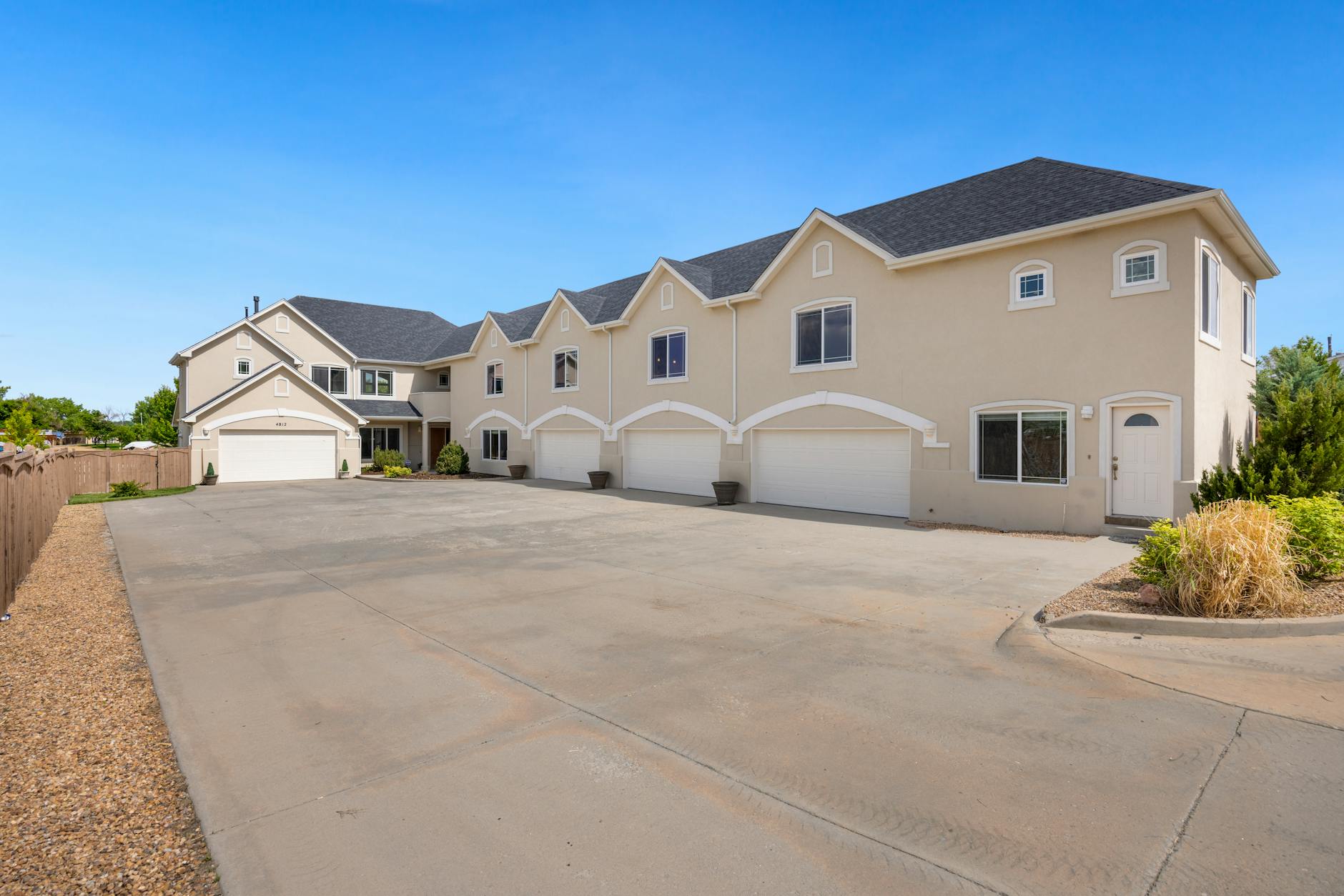
- Start by choosing your “triangle”: a primary school (max. 10 minutes), a safe route to get there, and daily groceries (max. 5–10 minutes).
- Put the energy label at the top of your viewing checklist: an A/B home feels different—and costs different—than D/E, especially for end-of-terrace homes and older semi-detached houses.
- In Geldrop-Mierlo, family neighborhoods are often a bike ride away from green space and key roads; improving a label (for example to C/B) regularly makes a difference in what families can afford to bid.
- Metselaars Makelaardij often uses a quick “label check” before a bid: insulation, glazing, systems, and ventilation—sharpened in 15 minutes.
- If the label is lower, always plan for an upgrade budget and a timeline; that’s how you avoid “buying cheap” but “living expensive.”
Introduction
A young family can view two homes in the same week that both look “move-in ready”—yet one quietly costs €150–€250 more per month in energy bills. That difference becomes obvious once you place the energy label (A to E) next to the home’s real technical profile: year of construction, insulation, glazing, heating systems, and ventilation. That’s why the best neighborhoods in the Brainport region for young families aren’t just about vibe—they’re also about predictability.In the Brainport region there’s another layer: heavy demand driven by jobs in and around Eindhoven, plus lots of “next-step” movers going from starter homes to family houses. So “best neighborhood” isn’t only about charm or playgrounds—it’s also about how stable your monthly costs will be, how comfortable the home is in both winter and summer, and how easy it will be to sell again in 5–10 years.
Metselaars Makelaardij is an NVM real estate agency in Nuenen (since 1981) supporting private clients with buying, selling, and valuation, with strong regional expertise around Eindhoven and towns such as Geldrop-Mierlo. In the way Metselaars Makelaardij works, one pattern keeps showing up: young families save time and stress when they compare neighborhoods using a consistent scorecard—and when they factor in the energy label early.
Understanding your options: what makes a neighborhood family-friendly (and where does the A–E energy label fit in)?
A truly family-friendly neighborhood is one where the day-to-day logistics work—and the home itself is future-proof from a technical standpoint. That may sound big, but for young families it comes down to five practical building blocks: (1) school and childcare, (2) safe outdoor play, (3) commuting and access, (4) home type and ability to expand, (5) energy label and upgrade potential.1) Family logistics: school, childcare, and short trips
For young families, time is the tightest resource. A neighborhood can be trendy, but if the school run is stressful or you’re forced onto the ring road twice a day, the shine wears off quickly.Picture a project lead at a tech company with two children (4 and 7) and a partner working in healthcare. That’s 8 school drop-offs/pick-ups a week, plus weekend sports. If school is a 12-minute drive instead of a 6-minute bike ride, you easily lose 1–2 hours per week to “car time.” It’s not just annoying—it changes how livable a neighborhood actually feels.
In places like Geldrop-Mierlo, buyers often benefit from neighborhoods where primary schools and sports fields sit logically within the residential layout. It makes the weekly routine predictable. The neighborhood choice becomes less emotion and more system.
2) Play space and safety: why street design and traffic matter
A neighborhood with wide sidewalks, 30 km/h zones, and plenty of “eyes on the street” feels fundamentally different for kids than an area with through traffic. Many young families only notice this after spending a few evenings on the street.One practical clue: many family neighborhoods have a mix of end-of-terrace homes, terraced houses, and semi-detached homes. That mix often brings different household types (first-time buyers, movers, seniors), which can improve social safety and informal supervision.
3) Access and commuting: working in Eindhoven, living more spacious just outside it
For many people, Brainport means working in or near Eindhoven and living just outside the city to get more space. That naturally puts places like Nuenen, Geldrop-Mierlo, Son en Breugel, and Helmond on the shortlist.Metselaars Makelaardij sees a recurring trade-off among buyers who work in Eindhoven: accept 10 extra minutes of commuting for a bigger garden, or live closer with less floor space. That decision is surprisingly often tied to the energy label: a smaller A/B home can be cheaper month-to-month than a larger D/E home.
4) Home type: space now, options later
For young families, “an extra room” usually means “future home office, guest room, or baby number three.” That’s why 1970s–1990s family homes are so popular: often 3–4 bedrooms, a fixed staircase to the attic, and a garden that’s actually usable.But here’s the catch: this segment frequently shows energy labels C through E, depending on renovation history. That brings us to the core of this article.
5) Energy label A to E: what does it tell you—and why does it matter even more for families?
The energy label is a standardized indicator of a home’s energy performance, calculated using a fixed inspection and methodology. In plain terms: A/B typically means better insulation and more efficient systems than D/E.What young families often underestimate is that label differences aren’t only about “cost”—they’re also about “comfort”: drafts, noise, temperature swings, and ventilation. A child’s bedroom under a poorly insulated roof can be too hot in summer and too cold in winter. That’s not a minor detail—it’s everyday friction.
How do you get an energy label? When selling, you’re required to provide a valid label. In practice, a certified energy performance advisor inspects the property and registers the label. Costs depend on the home and the inspection, but typically it’s hundreds of euros—not thousands.
A counterintuitive but important point: a “beautiful” family neighborhood can be the wrong choice if the available homes there consistently have lower labels and limited options to improve (for instance, apartment buildings with HOA restrictions). Meanwhile, a slightly less “status” area with plenty of B/C homes and a realistic path to A can be the smarter financial and practical decision.
Takeaway you can use today: don’t crown a neighborhood your “favorite” until you’ve checked the energy label and a realistic upgrade path (for example glazing, roof insulation, heating system) for the top 3 homes there—otherwise you’re comparing atmosphere, not running costs.
Detailed comparison: how does a modern family-focused neighborhood shortlist stack up against the traditional approach?
A modern shortlist isn’t just about feel and square meters—it also includes label risk, upgrade costs, and resale strength. Metselaars Makelaardij combines local market knowledge with a short, repeatable check that helps young families move faster from “nice house” to “smart decision.”Why the modern approach works especially well for young families
Young families don’t have much time—and they don’t have much patience for surprises. The traditional route is: viewings, falling in love, bidding, and only then digging into the paperwork. In a tight market it feels quicker, but it can get expensive.Imagine a data analyst (29) and a primary school teacher (31) who view 9 homes in 6 weeks around Eindhoven and Geldrop-Mierlo. They bid on a semi-detached house with label D because the kitchen is brand new. Only after their offer is accepted do they discover there’s no roof insulation and ventilation is poor. They end up setting aside €20.000–€35.000 for upgrades and spend their first winter dealing with condensation on the windows.
The modern route flips that: hard filters first, emotion second. That matches how Metselaars Makelaardij positions buying guidance—not more viewings, but better selection.
Comparison table (specific choices, no fluff)
| Aspect | Modern approach (Metselaars Makelaardij) | Traditional approach |
|---|---|---|
| Neighborhood selection | ✅ 5-criteria score | ⚠️ mostly gut feeling |
| Energy label check | ✅ before bidding | ❌ after acceptance |
| Upgrade budget | ✅ set aside €10–€40k | ⚠️ often overlooked |
| Time to decide | ✅ 2–4 weeks | ⚠️ 6–10 weeks |
| Bidding strategy | ✅ conditions + price | ⚠️ price only |
| Document review | ✅ early (HOA/report) | ⚠️ last-minute stress |
A note on the numbers: upgrade budgets vary widely. For family homes moving from label D/E to C/B, setting aside roughly €10.000–€40.000 is more realistic than €2.000–€5.000, especially if glazing, roof insulation, and heating systems are involved. It’s not a fixed formula—just a practical range many buyers use to avoid getting stuck.
How the energy label plays out by neighborhood type in the Brainport region
In the Brainport region, there are roughly three “worlds” of family neighborhoods:- Post-war areas with many terraced and end-of-terrace homes: lots of potential, but labels vary greatly.
- 1990s/2000s expansions: more favorable labels more often, sometimes with smaller gardens.
- Village centers with character homes: great atmosphere and location, but labels tend to be lower and upgrades can be more complex.
One extra practical tip: during a viewing, don’t just ask for the label—ask “what was done, and when?” Double glazing from 2005 isn’t the same as HR++ from 2022. And a heat pump without strong insulation is usually not step one.
If you want more context on making sharper housing choices around Eindhoven, you’ll recognize the same thinking in de filters die woningzoekers helpt sneller kiezen.
Takeaway you can use today: make a mini scorecard (school, play space, commute, energy label, ability to expand) and score every home within 24 hours of the viewing from 1–5; below 18 points, it’s not a “bid house.”
Which option fits you: how a young family actually chooses between neighborhoods (with Geldrop-Mierlo as an example)
The best neighborhood choice happens when you evaluate the “neighborhood” and the “home” separately—with the energy label as the bridge between them. That prevents a lovely street from hiding a mediocre home, or a great home from making you ignore a tough daily routine.Step 1: make two lists that are not allowed to influence each other
A simple method Metselaars Makelaardij often uses with young families is a clean split:- Neighborhood list: school/childcare, play areas, safety, commuting, amenities.
- Home list: layout, maintenance, energy label, upgrade options, light/noise.
Step 2: translate the energy label into family comfort (not just money)
Young families are especially sensitive to comfort issues: cold floors, drafts near the sofa, traffic noise in bedrooms. The energy label is a useful shortcut, but the real value is the conversation behind it.In practice, Metselaars Makelaardij sees that with label D/E buyers should always check:
1) Where heat loss happens: roof, walls, floor, or glazing.
2) What the ventilation setup is: vents, mechanical extraction, balanced ventilation.
3) The state of the heating and cooking setup: boiler, radiators, (prep for) electric cooking.
A concrete scenario: a nurse (28) buys an end-of-terrace home in Geldrop-Mierlo with label D and 110 m². By planning HR++ glazing and roof insulation first—and delaying the bathroom renovation—comfort complaints drop immediately. The “measurable” result isn’t a precise euro figure; it’s less condensation, fewer drafts, and a more stable temperature in the child’s bedroom.
Step 3: tie your bidding strategy to label risk
An energy label is also negotiation information. Not to play hardball—just to bid logically: price plus conditions plus planning.On a home with label A/B, it can be easier to lean into certainty (shorter conditions, or quicker financing steps), because the risk of hidden energy costs is lower. With label D/E, a deeper technical check and a realistic upgrade budget make more sense.
If you want to understand how negotiation in the Netherlands can become complicated due to role-splitting, it’s useful context alongside de uitleg over de dubbele pet en transparantie. That helps keep expectations sharp—especially when competition is intense.
Step 4: if you’re selling in a family neighborhood: use the label to speed up your sale (without making promises you can’t back up)
For sellers in family neighborhoods around the Brainport region, it’s simple: young families filter faster. A better label—or a credible upgrade story—helps.Metselaars Makelaardij often keeps it practical: don’t just show the label, build a tidy “proof folder” (insulation invoices, photos of added insulation, boiler servicing, ventilation settings). It makes viewings calmer and questions more specific.
If you want to sense-check your price before selling or renovating, a free valuation with local justification is a sensible starting point.
Takeaway you can use today: pick one neighborhood as your “base” and two as “backup,” and plan a maximum of 3 viewings per neighborhood; if you can’t find a home with label A–C or a workable upgrade path, move to the next neighborhood.
Understanding the options: how do you arrange an energy label, and what does A versus E really mean for family homes?
You arrange an energy label through a certified energy performance advisor who inspects and registers the home; the difference between A and E usually comes down to insulation, glazing, systems, and ventilation. For young families, this isn’t paperwork—it determines how the home feels and how much breathing room you’ll have in your monthly budget.Energy labels in real life: what A and E typically do (and don’t) tell you
Label A usually means: strong insulation, often HR++ (or better) glazing, and efficient systems. Label E often means: limited insulation, older glazing, and more heat loss. But the label isn’t a full structural survey. Two homes with label C can feel completely different due to orientation, draft sealing, or ventilation.A scenario that comes up often: a marketing manager (30) buys a terraced home with label B, then discovers the attic becomes unbearably hot in the first summer. The label is good, but sun exposure and limited ventilation make the space difficult as a home office. That’s why a label check should always be paired with “living checks”: sun, noise, ventilation, and shading.
How a young family can use the label wisely before bidding
Metselaars Makelaardij often uses a quick sequence that can be done in 20–30 minutes—even on a packed day of viewings: 1. Check the label + registration date (recent or outdated). 2. Ask what upgrades were done (glazing, roof, floor, walls, systems). 3. Look with your eyes: glass type, window frames, radiators, ventilation vents. 4. Turn it into a plan: “first winter fixes” (comfort) and “year 1–2” (bigger steps).This is also where valuation and financing can overlap with your neighborhood choice. A better label can sometimes support more favorable financing room and stronger resale prospects; a lower label more often requires a bigger buffer.
If you’re buying and considering financing or renovations, you may need a validated report. In that case, uitleg over een taxatie die aansluit op het doel is useful, because in practice there are multiple types of “valuation.”
A contrarian insight: label E isn’t automatically a bad buy
Many first-time buyers and young families instantly rule out label D/E. Understandable. But in some neighborhoods, label E may be the only realistic route to a family home with a garden—especially if the neighborhood itself fits perfectly.The difference comes down to two questions:
- Is there a logical technical upgrade path (roof, glazing, floor) without gutting the entire home?
- Does the renovation timeline fit your family life (not during the newborn phase, not during a new job)?
A label E home with strong “envelope potential” can be a great family choice with good planning. Meanwhile, a label C home with no room to expand can become tight the moment a second child arrives.
If you like structure for buy/sell planning, the same step-by-step calm shows up in een strak verkoopproces met duidelijke beslismomenten. Same principle: less guessing, more deciding.
Takeaway you can use today: if the label is D/E, only bid after you have an upgrade list with (1) top 3 measures, (2) an indicative budget, (3) a timeline within 12 months.
This article follows the E-E-A-T kwaliteitsrichtlijnen.
Frequently asked questions
How do you know if a neighborhood is genuinely good for young families?
Family logistics matter most: primary school, childcare, and groceries within 5–10 minutes, plus a safe route without stressful crossings. Also check whether there are enough home types to “grow into” (for example an attic with a fixed staircase). Walk the school route once in the morning and do another loop around dinner time.What is an energy label and how do you arrange it when selling?
An energy label is an official indicator of a home’s energy performance and is mandatory to provide when selling. A certified energy performance advisor visits to inspect and register the label; costs are usually in the hundreds of euros. When viewing, always ask for the registration date and the evidence behind claimed upgrades.In practice, what’s the difference between energy label A and E?
The difference usually comes down to insulation (roof/walls/floor), glazing type, and system efficiency. With label A/B, there’s typically less risk of drafts, cold spots, and extreme peak usage; with label E, you’ll more often need an upgrade budget and a plan. For young families, this mostly translates into bedroom and attic comfort.How can Metselaars Makelaardij help you choose a neighborhood and a home?
Metselaars Makelaardij’s buying guidance focuses on faster selection and fewer surprises: a consistent neighborhood scorecard and a quick label check before you bid. With 40+ years of regional experience around Eindhoven and towns like Geldrop-Mierlo, the team can assess whether a home both “feels right” and adds up financially. For approach and contact options, see hoe Metselaars Makelaardij aankoopkeuzes onderbouwt.When is a valuation needed when a young family buys a home?
A valuation is often required for a mortgage and sometimes for renovation plans, depending on the lender. Arrange it early if the energy label is lower and you’re planning upgrades, so the budget and expected value development align on paper. An NWWI-validated report is standard in many processes.Conclusion
The best neighborhoods in the Brainport region for young families aren’t automatically the most popular or the ones that look best on paper. They’re the ones that feel predictable in daily life: school nearby, safe outdoor play, and a home that’s comfortable without letting energy bills take over. The energy label makes that predictability tangible. A/B often delivers immediate comfort; D/E can still be a good choice, but only with a clear upgrade path and a realistic timeline.For families searching in Geldrop-Mierlo or nearby, a two-step comparison works best: first evaluate the neighborhood on logistics, then evaluate the home on label and expandability. Metselaars Makelaardij sees in practice that this order brings calm to both viewings and bidding. A logical next step is building a sharp shortlist per neighborhood—and for sellers, starting with a well-supported valuation and an energy-label story that holds up under scrutiny.